How to avoid microplastics in the kitchen
Research-based: built from manufacturer specs and published studies. Not a hands-on test.
What the studies actually measured
Two well-cited lab studies give the clearest picture of where kitchen plastic sheds particles.
A 2023 University of Nebraska study filled two polypropylene containers and one polyethylene food pouch with water or a mild acid that stands in for acidic food, then tested several everyday uses. Microwaving released the most particles by far. Some containers released as many as 4.22 million microplastic and 2.11 billion nanoplastic particles from a single square centimetre of plastic in three minutes of heating. Fridge and room-temperature storage over six months also released millions to billions of particles.[2] The same team found that at high concentrations the extracted particles killed most cultured human kidney cells in a dish. That is a lab result, and it does not tell you what happens in a person.
A 2023 North Dakota State study chopped on polyethylene and polypropylene boards and estimated one person's yearly exposure at 7.4 to 50.7 grams of microplastics from a polyethylene board and 49.5 grams from a polypropylene one. Its preliminary toxicity test found no effect on mouse cells over 72 hours.[3]
What regulators say
The FDA's position is that current scientific evidence does not demonstrate that the levels of microplastics or nanoplastics detected in foods pose a risk to human health. It also says there is not sufficient evidence that particles from plastic food packaging migrate into foods.[1] Researchers are still working on it. A 2024 NEJM study found plastic particles in the artery plaque of 58.4% of 257 surgery patients, and those patients had a higher rate of heart attack, stroke or death over about 34 months.[4] That is an association in one group of patients, not proof the plastic caused anything.
On BPA, the regulators split. Health Canada concluded that current dietary exposure from packaging is not expected to pose a health risk to the general population, including infants.[5] In 2023 EFSA set a tolerable daily intake of 0.2 nanograms per kilogram of body weight per day, replacing its earlier temporary level of 4 micrograms, and said people in all age groups exceed it.[6]
So the evidence is unsettled. Most of the swaps below cost little and you can undo them, which is why they are worth doing anyway.
The swaps, in order
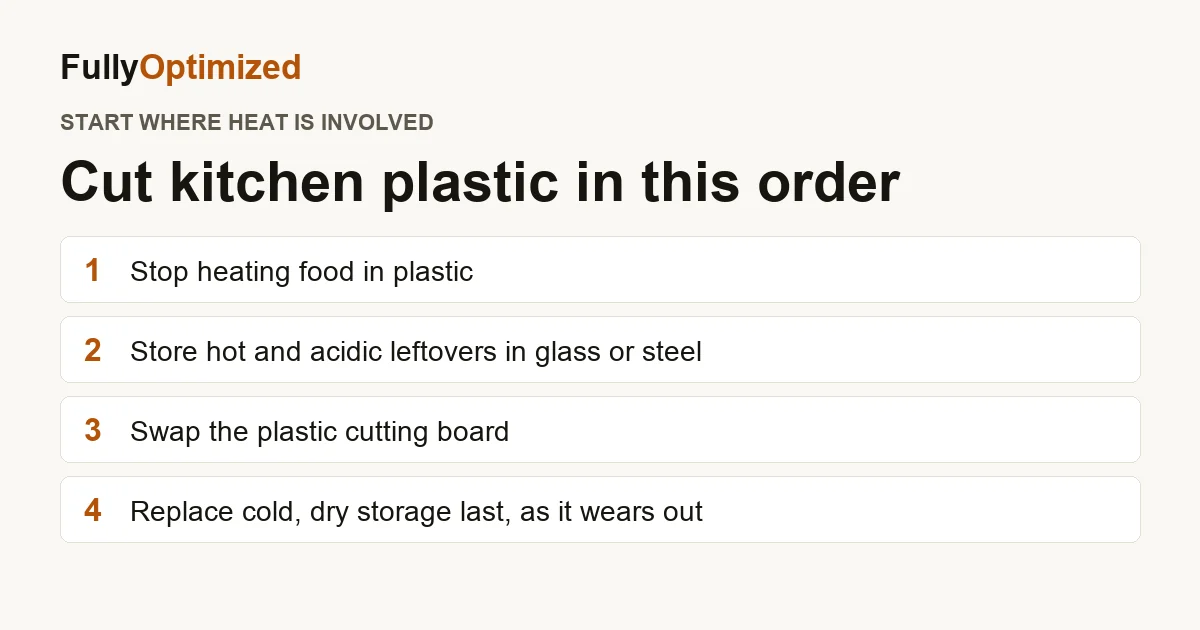
1. Stop heating food in plastic
This is the use that released the most particles in the Nebraska study, and the easiest to change. Reheat in a glass or ceramic dish. If your glass container has a plastic lid, take it off or rest it loosely on top. The FDA also says some plastic containers should not go in the microwave at all because hot food can melt them.[7] Glass sets differ on lids and oven use, which we compare in Pyrex vs Glasslock.
2. Store hot and acidic leftovers in glass or steel
The Nebraska study used a mild acid to stand in for acidic food, and months of fridge storage still released particles. Tomato sauce, curries and soups going into the fridge warm are the next easiest wins. Glass is the default. Stainless steel is lighter and does not shatter, which matters for lunches and kids; see stainless steel food storage, compared.
3. Rethink the plastic cutting board
Wood or bamboo boards avoid the particles measured in the cutting board study.
4. Leave cold, dry storage for last
Plastic bins for pasta or crackers are the lowest-heat use in your kitchen. Swap them out when they wear out, not all at once.
Glass or steel?
Glass lets you see what is inside and goes from fridge to microwave. The trade-offs are weight, breakage, and a plastic lid on most sets. Stainless steel is light and unbreakable, but you cannot see through it and most of it cannot go in the microwave. If you are choosing glass, the type matters more than the brand name; we explain it in is borosilicate glass safe?. For the head-to-head on material, read glass vs plastic food storage.
Common questions
Is it safe to microwave food in plastic containers?
The FDA says some plastic containers should not go in the microwave because hot food can melt them, so follow the label. Separately, a 2023 lab study found microwaving was the usage that released the most micro- and nanoplastic particles from the polypropylene and polyethylene items it tested. If you want to avoid that, reheat in glass or ceramic.
Do glass containers still have plastic lids?
Usually, yes. Most glass storage sets use polypropylene lids, often with a silicone gasket. Take the lid off or set it loosely on top when you microwave, and do not put the lid in the oven.
Do I need to throw out all my plastic containers?
No. Cold, dry storage is the lowest-heat use and the easiest to keep. Retire plastic from the jobs that involve heat first: microwaving and holding hot leftovers.
Is BPA still a concern?
Regulators disagree. Health Canada says current dietary exposure from food packaging is not expected to pose a health risk. EFSA, the EU food safety agency, cut its tolerable daily intake sharply in 2023 and concluded that consumers in all age groups exceed it.
Get new sleep and recovery reviews by email
One email when we publish a new hands-on review or a major update. No daily newsletter.
Sources
- U.S. Food and Drug Administration, Microplastics and Nanoplastics in Foods (content current as of 2024-07-24)
- Hussain et al., Environmental Science & Technology 57(26), Assessing the Release of Microplastics and Nanoplastics from Plastic Containers and Reusable Food Pouches (2023-06-21)
- Yadav et al., Environmental Science & Technology 57(22), Cutting Boards: An Overlooked Source of Microplastics in Human Food? (2023-05-23)
- Marfella et al., New England Journal of Medicine 390(10), Microplastics and Nanoplastics in Atheromas and Cardiovascular Events (2024-03-07)
- Health Canada, Bisphenol A (BPA) in food packaging (checked 2026-10-17)
- European Food Safety Authority, Bisphenol A in food is a health risk (2023-04-19)
- U.S. Food and Drug Administration, Microwave Ovens (checked 2026-10-17)